Angled Round Glasses Mini Embroidery Review
As an embroidery designer preparing for the upcoming weekend craft fair season, I am constantly evaluating which digital assets will translate best into physical sales. When reviewing the Angled Round Glasses Mini Embroidery design, my immediate impression is one of modern minimalism with a touch of academic charm. This is not an overly ornate or traditional floral motif; rather, it feels bold, clean, and distinctly contemporary. The angled placement suggests movement and personality, moving away from stiff symmetry to create a more relaxed, approachable aesthetic. For sellers targeting the Back To School demographic or customers who appreciate literary and intellectual themes, this machine embroidery design strikes a perfect balance between niche appeal and broad marketability.
Evaluating Market Viability for Craft Fair Products
When setting up a booth display, visual hierarchy is everything. Customers walking past a table need to understand what a product is within seconds. The Angled Round Glasses Mini Embroidery excels here because its silhouette is instantly recognizable even from a distance. Unlike complex scenes that require close inspection, this icon reads clearly as eyewear immediately. This makes it an exceptional candidate for high-traffic items where quick recognition drives impulse purchases.
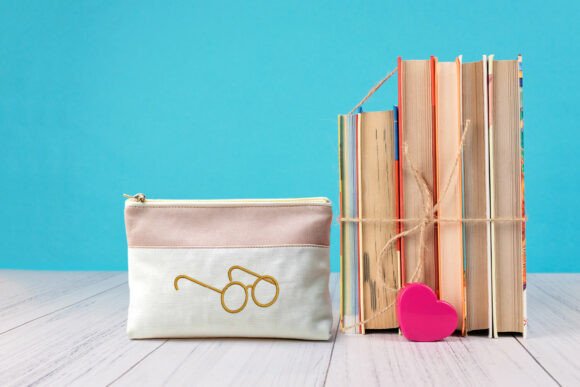
For my own production line, I see this design performing exceptionally well on specific handmade products. Tote bags are perhaps the strongest application; the 3-inch size serves as a perfect chest-level accent or a centered minimalist statement on canvas market bags. Similarly, apron embroidery benefits from this design’s scale. Placed on the bib of a teacher’s apron or the pocket of a barista apron, it adds professional character without overwhelming the garment. Tea towel embroidery is another viable avenue, particularly for linen blends where the simple stitch lines complement the fabric texture rather than fighting against it. For Etsy sellers focusing on small shop products, this design also translates beautifully onto fabric pouches, pencil cases, and pillow covers, offering a cohesive collection theme that encourages multiple sales.
Size Versatility and Production Efficiency
One of the most practical aspects of this embroidery file is the inclusion of four distinct sizes: 1.5 inches, 2 inches, 2.5 inches, and 3 inches. As a business owner, having pre-digitized sizes saves hours of resizing and testing. Each size serves a unique commercial purpose in batch production:
- 1.5 Inches: Ideal for embroidered patches, shirt cuffs, collar points, or baby bibs. At this scale, the design acts as a subtle detail rather than a focal point.
- 2 Inches: Perfect for standard left-chest placement on polos or as a repeating pattern element on tote bag straps.
- 2.5 Inches: A versatile middle ground for tea towels, napkins, and medium-sized pouches.
- 3 Inches: Best used as a standalone focal design on larger tote bags, backpacks, or decorative pillow covers.
This versatility directly impacts profit margins. Being able to use the same digital embroidery file across multiple product categories means less digitizing time and more consistent branding. For commercial embroidery businesses, this repeatability is key to maintaining efficiency during peak seasons like Back To School.
Technical Considerations and Stitch Quality
While the aesthetic is appealing, technical execution determines whether a finished product looks handmade or homemade. When working with the Angled Round Glasses Mini Embroidery, stitch density is a primary concern. Eyewear designs often feature satin stitches for the frames. If the density is too high on smaller sizes like the 1.5-inch version, the thread can build up, causing puckering or needle breaks on lighter fabrics. Conversely, if the density is too low, the frame may look sparse on textured towels. It is vital to inspect the stitch properties before running a full production batch.
Fabric texture plays a significant role in clarity. On smooth cotton or canvas, the angled lines will appear crisp. However, on terry cloth tea towels or waffle-weave fabrics, the fine details of the glasses’ bridge or temples might get lost. In these instances, using a water-soluble topping stabilizer is non-negotiable to prevent stitches from sinking into the pile. For curved surfaces like caps, the 3-inch size may be too wide for the hoop area or the curve itself, potentially causing registration issues. Always confirm your specific hoop size capabilities and test on a scrap cap before committing to headwear production.
Thread colors also dictate the final perceived value. While black or tortoiseshell brown threads offer realism, consider how the design interacts with dark fabrics. White or metallic gold threads on navy canvas tote bags create a premium, boutique feel that justifies a higher price point. Always check thread contrast against your base material; low-contrast combinations can make the angled glasses disappear in photographs and in person.
Photography and Digital Listing Strategy
For Etsy sellers and digital creators, how this design photographs is as important as how it stitches. The angled orientation of the glasses creates natural dynamic tension in photos, avoiding the static look of perfectly horizontal icons. When creating printable mockups or listing images, utilize the 3-inch size to ensure the design is visible in thumbnail views. Because the design is minimalist, it pairs well with negative space in photography, allowing you to style props like books, coffee cups, or school supplies around the finished product to reinforce the Back To School narrative.
However, be mindful of lighting. Satin stitches reflect light differently depending on the angle. When photographing samples made with the Angled Round Glasses Mini Embroidery, use diffused lighting to avoid harsh glare on the glossy thread that could obscure the shape. High-quality photos of real stitched samples build trust far faster than digital renderings alone.
Designer Notes for Successful Implementation
Before listing any item featuring this design or selling the digital file itself, adhere to these professional best practices to protect your brand reputation:
- Test on Scrap Fabric: Never run a new design directly on sellable inventory. Test all four sizes on fabric scraps that match your intended final product weight and weave.
- Verify Stabilizer Pairing: Match your stabilizer to the fabric, not just the design. Cut-away for knits, tear-away for stable wovens, and wash-away for towels.
- Check Commercial Licensing: Confirm the license terms included in the zip file. Ensure you have the right to sell finished physical products versus distributing the digital embroidery file itself.
- Inspect Small Details: After stitching the 1.5-inch version, physically inspect the bridge and nose pads. If they are muddy or undefined, do not use that size for sale. Clarity equals quality.
- Create Real Mockups: Before investing in bulk materials, stitch one sample and photograph it. Compare this against your digital mockups to ensure customer expectations align with reality.
The Angled Round Glasses Mini Embroidery represents a smart investment for creative entrepreneurs. Its blend of modern style, functional sizing, and clear iconography makes it a reliable performer for craft fair booths and online shops alike. By respecting the technical requirements of stitch density and fabric pairing, this design can elevate your product line from generic to professionally curated. Whether applied to a teacher’s tote bag or a student’s pencil case, it offers a tangible connection to the joy of learning and reading, making it a timeless addition to any embroidery business portfolio.