Class of 2026 Senior Embroidery: A Business Review
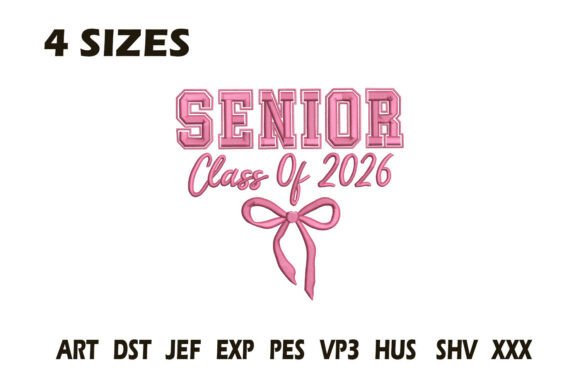
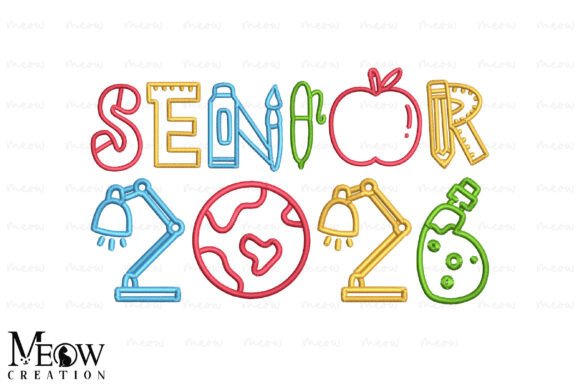
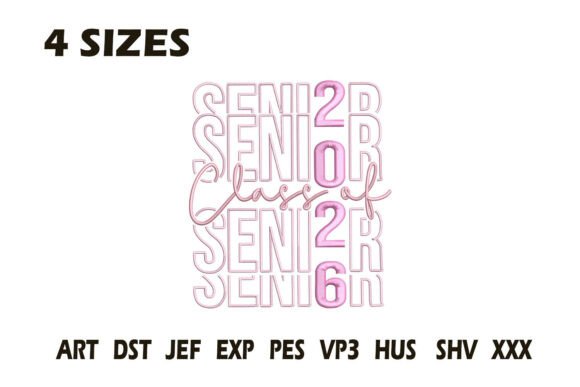
As an experienced embroidery designer evaluating assets for commercial production, my first impression of the Class of 2026 Senior Embroidery is that it strikes a necessary balance between celebratory whimsy and structural integrity. While the product description highlights its charm for home decor and t-shirts, my review focuses strictly on its viability for small business merchandise and branded applications. For apparel decorators and Etsy sellers targeting the upcoming graduation season, this machine embroidery design offers a playful aesthetic that can translate well into retail products, provided it is applied with technical precision.
Visual Personality and Brand Alignment
The visual language of this design leans towards friendly and approachable rather than rigid or institutional. In the context of brand identity, this is a significant asset for businesses aiming to connect emotionally with graduates and their families. The "whimsical touch" mentioned in the description suggests a font style or graphic element that feels handmade and personal. For a boutique or creative studio, this softness differentiates custom apparel from generic, mass-produced graduation gear. However, for corporate uniforms or strict institutional branding, the playfulness must be weighed against the need for authority. As a digital embroidery file, it appears optimized for items where personality drives sales, such as senior class merch or personalized gifts.
Evaluating Performance for Commercial Merchandise
When integrating Class of 2026 Senior Embroidery into a commercial embroidery workflow, versatility is key. I have evaluated this design across several high-demand business categories:
- Custom Apparel and T-Shirts: This is the primary use case. The design’s playful nature works exceptionally well on left-chest placements or centered back prints for senior class shirts. The stitch structure likely accommodates standard cotton and poly-blend tees without excessive puckering.
- Tote Bag Design: Graduation season drives massive demand for gift bags and book totes. This design serves as an excellent centerpiece for canvas tote bags. Because totes are often unstructured, the design must have adequate underlay to prevent distortion, which this file appears to support given its intended use on varied fabrics.
- Apron Embroidery: For campus coffee shops or bakeries hiring student staff, this design adds a seasonal, festive touch to workwear. It transforms a standard uniform into a commemorative item, increasing perceived value for both the employee and the customer.
- Embroidered Patches: With the right border treatment, this design can function as a standalone patch. This is ideal for denim jackets or backpacks where direct embroidery is difficult. The whimsical elements provide distinct outlines that hold up well when digitized with a merrowed edge.
- Cap Embroidery: While usable, caps present challenges. If the design includes wide horizontal text or intricate details, it may require modification for curved surfaces. It is best suited for flat-brim hats or structured caps with sufficient center height.
Technical Considerations and Application Limits
Despite its charm, professional embroiderers must exercise caution when deploying Class of 2026 Senior Embroidery in specific scenarios. Not every fabric texture or garment type is compatible with whimsical digitizing styles.
Fabric Texture and Stabilizer Requirements
The description notes suitability for towels and t-shirts, implying the design handles both pile and knit fabrics. However, for business production runs, you cannot rely on default settings. When stitching on textured fabrics like terry cloth or fleece, a water-soluble topping is mandatory to prevent stitches from sinking. Conversely, for lightweight performance wear or silky linings, a cutaway stabilizer is essential to maintain registration. Always test the embroidery file on the exact substrate you intend to sell; a design that looks perfect on cotton twill may distort on ribbed knit.
Size Reduction and Detail Integrity
A common pitfall in small business merch is attempting to shrink designs too small for tags, sleeve cuffs, or pocket logos. Whimsical fonts often feature varying stroke widths and decorative serifs that do not scale down linearly. Before using Class of 2026 Senior Embroidery for tiny accents, verify the minimum recommended size. Reducing below the digitizer's threshold risks thread breaks, illegible text, and needle damage. If you need a miniature version for a product label or tag, request or create a simplified variant specifically optimized for high-density, small-scale stitching.
Washability and Durability
For items requiring frequent washing, such as aprons, towels, or staff uniforms, inspect the stitch density and lock stitches. Playful designs sometimes prioritize aesthetics over durability, utilizing satin stitches that may snag or pull threads in industrial laundries. Ensure all color changes and jump stitches are properly secured. For commercial clients, longevity equals trust; a fraying logo after three washes damages your reputation as a decorator.
Impact on Business Value and Customer Engagement
Beyond technical execution, choosing the right design assets directly influences buyer engagement. Class of 2026 Senior Embroidery taps into the nostalgia and excitement of the Back To School and graduation transition period. For Etsy sellers and local shops, offering this specific year marker creates urgency and relevance. Customers are not just buying a shirt; they are buying a timestamped memory. The handmade presentation facilitated by this design elevates the finished product above screen-printed alternatives, justifying higher price points and fostering customer loyalty through perceived craftsmanship.
Professional Designer Notes for Production
To ensure Class of 2026 Senior Embroidery meets professional standards for resale, follow this pre-production checklist:
- Verify Licensing: Before listing any finished product for sale, confirm the commercial licensing terms of the digital embroidery file. Ensure you have the right to sell physical goods featuring this design.
- Create Printable Mockups: Use software to generate realistic mockups for client approval. This manages expectations regarding size, placement, and thread colors before hooping fabric.
- Test Thread Colors: Whimsical designs often rely on specific color contrasts for readability. Test on dark versus light fabrics to ensure visibility. What looks vibrant on screen may lack contrast on navy or black garments.
- Check Hoop Size Compatibility: Confirm the design dimensions fit within your machine’s hoop capabilities while leaving adequate margin for clamping. Never hoop at the absolute maximum limit; tension issues will arise.
- Run a Black and White Test: Stitching the design in a single neutral color reveals structural flaws hidden by multi-color shading. Check for gaps, poor registration, or unnecessary trims.
- Inspect Spacing and Kerning: Variable lettering in playful designs can sometimes result in uneven spacing. Visually inspect the test stitch-out to ensure professional consistency.
- Compare Beside Other Assets: If building a collection, stitch this design alongside other graduation assets to ensure visual cohesion in your shop display or online catalog.
By treating Class of 2026 Senior Embroidery as a professional production asset rather than merely a decorative file, small business owners can maximize its potential. Whether creating custom apparel, branded patches, or boutique merchandise, success lies in respecting the technical parameters while leveraging the design's inherent emotional appeal. Always validate specifications against your specific equipment and fabric choices to deliver a premium finished product that satisfies both the graduate and the business bottom line.