Whimsical Crayon Doodle: A Designer’s Review
Capturing the Hand-Drawn Aesthetic in Thread
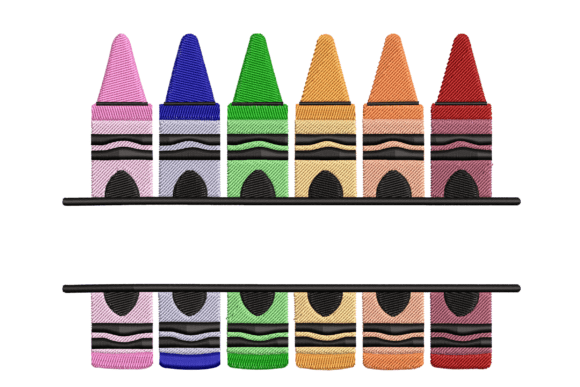
As an embroidery designer who has digitized and tested countless files for commercial production, I approach every new machine embroidery design with a specific set of criteria. It is not enough for a graphic to look cute on a screen; it must translate into thread without losing its soul. When evaluating the Whimsical Crayon Doodle, my immediate focus was on how well it captures that elusive hand-drawn aesthetic. In the world of Back To School merchandise and personalized gifts, there is a fine line between charmingly imperfect and professionally messy. This design leans successfully toward the former, offering a playful, artistic personality that feels authentic rather than manufactured.
The visual mood of this embroidery file is distinctly cheerful and nostalgic. For those of us running Etsy seller shops or managing small apparel brands, this type of artwork serves as a versatile anchor. It does not scream for attention but rather invites the viewer in with a sense of warmth. Whether you are planning a line of custom tote bags or looking for a unique accent for nursery decor, the layout suggests a flexibility that is rare in more rigid, traditional digitizing. However, translating crayon textures into satin stitches or fill patterns requires careful consideration of fabric choice and stabilizer pairing to maintain that intended whimsy.
Real-World Application: The Custom Tote Bag Test
To truly judge the viability of Whimsical Crayon Doodle, I mentally placed it in a current production scenario: creating a batch of canvas tote bags for a local teacher appreciation event. Canvas is a textured, unforgiving substrate that can easily swallow fine details. In this real-life application, the design’s success hinges on stitch definition. If the lines are too thin or the density is insufficient, the "crayon" effect disappears into the weave of the bag. Conversely, if the stitch density is too high, the canvas becomes stiff and unappealing.
For this specific tote bag design project, I would recommend testing the design on a scrap piece of similar weight canvas before committing to the final run. You need to verify that the thread colors pop against the natural fabric tone. Since crayons are associated with bright primaries and secondaries, ensuring your thread palette matches the digital preview is crucial for customer satisfaction. A muddy red or dull yellow will ruin the nostalgic impact immediately. This design works exceptionally well here because the doodle style forgives minor registration shifts that might occur on textured fabrics, making it a safer bet for commercial embroidery projects where speed and consistency matter.
Fabric Compatibility and Technical Considerations
While Whimsical Crayon Doodle is marketed as ideal for t-shirts, towels, and home decor, experienced makers know that "ideal" is relative to your stabilizer strategy. When applying this to stretchy knits like sweatshirts or baby onesies, the open nature of doodle-style stitching can sometimes lead to puckering if the garment is over-stabilized or if the underlay is too aggressive. I always advise checking the stitch type breakdown in your software before hooping. If the design relies heavily on running stitches to simulate pencil or crayon lines, ensure you are using a ballpoint needle to prevent fabric damage on delicate knits.
There are also areas where caution is warranted. Dark fabrics present a challenge for any design meant to mimic wax crayons. Unless the digitizer included a white underlay base specifically for dark garments, the vibrant thread colors may get lost against black or navy material. Always test on both light and dark backgrounds. Additionally, be mindful of curved surfaces like caps. While the design adds character, complex corner details or tiny lettering often found in doodle art can distort on the limited flat sewing area of a hat frame. For caps, consider resizing or simplifying the outer elements to preserve clarity.
- Stretchy Fabrics: Use cut-away stabilizer and consider a topping for knits to keep stitches from sinking.
- Towels and Terry Cloth: A water-soluble topping is non-negotiable to prevent pile from poking through the doodle lines.
- Sheer or Thin Fabrics: Verify that the stitch density won’t cause tearing; tear-away stabilizers may be too harsh during removal.
- Frequent Wash Items: Ensure all jump stitches are trimmed and secured, as loose threads in a doodle design can unravel quickly in laundry.
Elevating Product Value and Brand Perception
Beyond technical execution, we must consider marketability. For creative entrepreneurs and handmade shop owners, Whimsical Crayon Doodle offers a distinct advantage: perceived value. Customers associate intricate, artistic embroidery with higher quality compared to generic clip art. When used on a personalized gift or boutique product, this design signals thoughtfulness. It bridges the gap between mass-produced retail and bespoke craftsmanship, which is exactly what buyers on platforms like Etsy are searching for.
However, professionalism remains key. Even a whimsical design must be executed cleanly. Stray jump stitches or poor color contrast can downgrade the item from "boutique" to "craft fair reject." Before listing a finished product, create printable mockups to see how the design scales visually. Does it look balanced on a chest placement versus a center pocket? Testing these variations ensures your brand consistency remains intact. Furthermore, always confirm the licensing terms of the digital embroidery file. Understanding whether you have rights for unlimited physical sales or limited runs protects your business and builds trust with your clientele.
Designer Notes for Successful Implementation
- Always Test Stitch: Never assume a file is perfect out of the box. Run a test on scrap fabric identical to your final project to check tension and density.
- Verify Hoop Size: Confirm the design dimensions fit comfortably within your hoop with adequate margin for stabilization; cramming causes distortion.
- Check Thread Contrast: View your thread selection in natural lighting. Digital screens often misrepresent how sheen and matte threads interact.
- Inspect Small Details: Zoom in on the design file to identify tiny text or narrow columns that may require editing for thicker threads or textured fabrics.
- Review Licensing: Double-check if the design allows for commercial use on finished products or if it is restricted to personal crafting only.
- Mockup Realistically: Use realistic templates that show fabric texture and drape, not just flat vector overlays, to gauge true visual appeal.
Ultimately, Whimsical Crayon Doodle is a strong contender for anyone looking to add artistic flair to their embroidery lineup. It performs best when treated with respect for the medium—acknowledging that thread behaves differently than pixel. By paying attention to stabilizer choices, fabric textures, and color accuracy, you can transform this digital asset into a tangible product that delights customers and showcases your skill as a maker. Whether for a back-to-school collection or a year-round staple in your shop, this design brings a necessary dose of joy to the embroidery landscape.